
Disclaimer: This article is for informational purposes only and does not constitute financial, legal, or real estate advice. Housing costs, market conditions, and tax implications vary significantly by location. Consult a financial advisor and real estate professional for guidance specific to your situation.
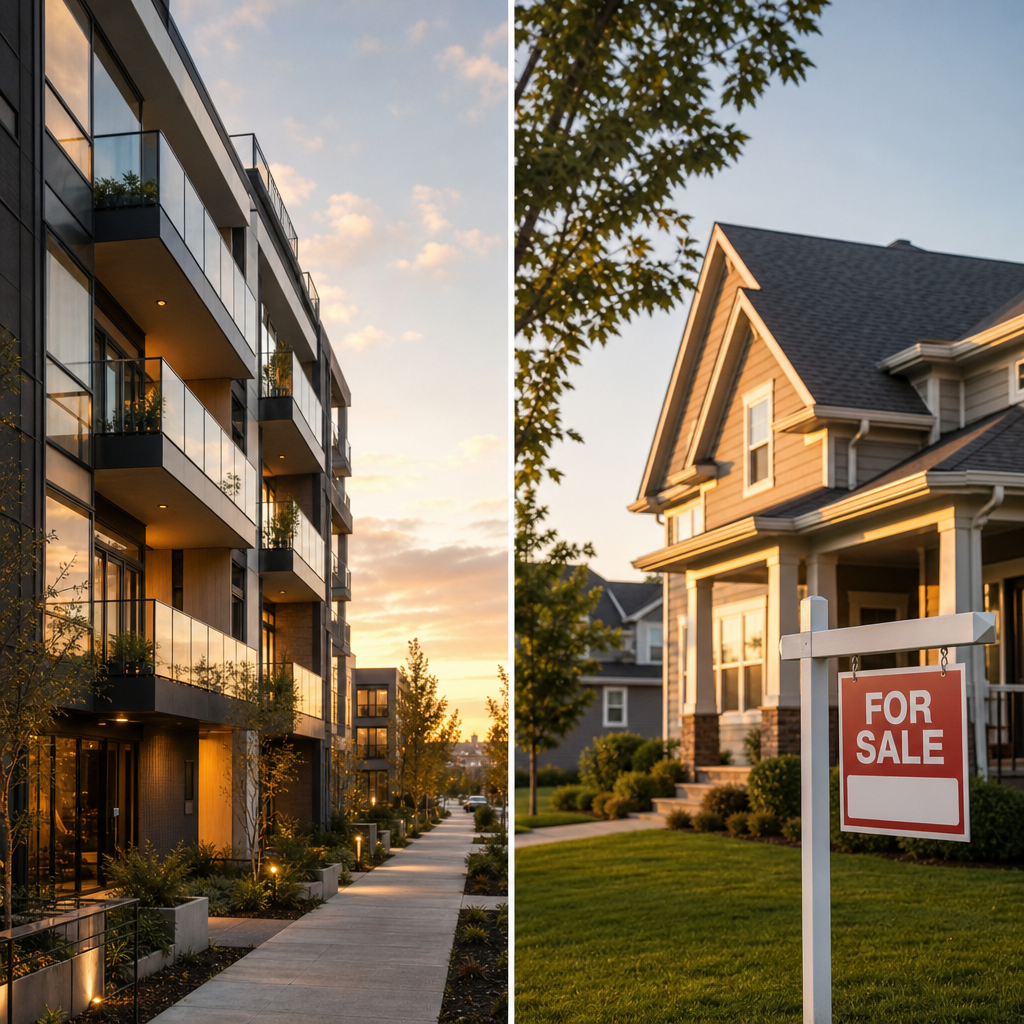
The rent vs. For more details, see our guide on how to negotiate your rent. buy debate has never been more nuanced than in 2026. With mortgage rates hovering around 6.5-7%, home prices near all-time highs, and rent increases moderating in many markets, the calculus has shifted significantly from the “buy at all costs” mentality of previous decades.
This comprehensive analysis breaks down the true costs of renting versus buying, provides a framework for making the right decision for your financial situation, and debunks the myths that lead people astray on both sides of the debate.
The True Cost of Buying a Home in 2026
Most first-time buyers dramatically underestimate the total cost of homeownership. The mortgage payment is just the beginning.
Complete Monthly Cost Breakdown
| Cost Component | Typical Amount (on $400K home) | Annual Total |
|---|---|---|
| Mortgage payment (P&I, 6.75%, 30yr, 10% down) | $2,334 | $28,008 |
| Property taxes (1.1% avg) | $367 | $4,400 |
| Homeowner’s insurance | $200 | $2,400 |
| PMI (until 20% equity) | $150 | $1,800 |
| Maintenance & repairs (1% of value) | $333 | $4,000 |
| HOA fees (if applicable) | $250 | $3,000 |
| Total monthly cost | $3,634 | $43,608 |
Hidden costs most buyers forget:
- Closing costs: 2-5% of purchase price ($8,000-$20,000 on a $400K home)
- Moving expenses: $2,000-$5,000+
- Immediate repairs and updates: Average $10,000+ in first year
- Furniture and equipment: Lawn mowers, tools, appliances not included with the home
- Higher utility costs: Homes typically cost 20-40% more to heat, cool, and maintain than apartments
- Selling costs: 8-10% of sale price when you eventually sell (agent commissions + closing costs + repairs + staging)
The True Cost of Renting in 2026
Renting is simpler to calculate but has its own financial dynamics:
| Cost Component | Typical Amount (comparable rental) | Annual Total |
|---|---|---|
| Monthly rent | $2,100 | $25,200 |
| Renter’s insurance | $25 | $300 |
| Parking (if separate) | $75 | $900 |
| Total monthly cost | $2,200 | $26,400 |
In this example, renting saves $1,434/month compared to the full cost of owning a comparable property. The question is: what happens if you invest that savings?
The “Invest the Difference” Analysis
The most important calculation in the rent vs. buy debate isn’t the mortgage payment — it’s the opportunity cost of your down payment and monthly savings.
Scenario: $400K Home vs. Renting + Investing
| Factor | Buy ($400K Home) | Rent + Invest |
|---|---|---|
| Down payment (10%) | $40,000 → home equity | $40,000 → invested at 8% |
| Monthly housing cost | $3,634 | $2,200 |
| Monthly difference invested | — | $1,434 → invested at 8% |
| Home appreciation (3%/yr) | $400K → $538K in 10 yrs | — |
| Investment growth | — | $40K → $86K; $1,434/mo → $262K |
| Equity after 10 years | ~$196K (appreciation + principal paid) | ~$348K (investments) |
| Net after selling costs (8%) | ~$153K | ~$348K (minus cap gains tax) |
Note: This is a simplified illustration. Actual results depend on your specific market, tax situation, and investment returns. Home appreciation and stock market returns are not guaranteed.< Learn more in our guide to best home equity loans of 2026./p>
This scenario shows why the conventional wisdom that “buying is always better than renting” isn’t always true, especially in expensive markets with high price-to-rent ratios.
The Price-to-Rent Ratio: Your Quick Decision Tool
The price-to-rent ratio is the simplest way to gauge whether buying or renting makes more financial sense in your area:
Price-to-Rent Ratio = Home Price ÷ (Monthly Rent × 12)
| Ratio | Interpretation | Recommendation |
|---|---|---|
| Under 15 | Buying is strongly favored | Buy if you plan to stay 3+ years |
| 15-20 | Neutral — depends on personal factors | Analyze your specific situation |
| Over 20 | Renting is favored financially | Rent and invest the difference |
| Over 25 | Buying is significantly more expensive | Strongly favor renting |
Examples by major metro area (2026 estimates):
- San Francisco: Ratio ~28 (strongly favors renting)
- New York City: Ratio ~25 (favors renting)
- Austin: Ratio ~19 (neutral)
- Dallas: Ratio ~16 (slightly favors buying)
- Cleveland: Ratio ~10 (strongly favors buying)
- Detroit: Ratio ~8 (very strongly favors buying)
When Buying Makes Sense
Buying a home is likely the better choice if you meet most or all of these criteria:
- You plan to stay 5+ years: Transaction costs (closing costs, agent commissions) typically require 5+ years to recoup through appreciation
- You have a 20% down payment: Avoiding PMI saves $100-$300+/month and improves your cost equation significantly
- Your price-to-rent ratio is under 15: The math strongly favors buying in your market
- You have an emergency fund beyond your down payment: At least 6 months of expenses, separate from your housing savings
- Your total housing costs will be under 28% of gross income: The traditional affordability threshold
- You value stability and customization: You want to renovate, have pets without restrictions, or establish roots in a community
- Mortgage rates are low relative to historical averages: Rates under 5% significantly shift the math in favor of buying
When Renting Makes Sense
Renting is likely the smarter choice if:
- You might move within 3-5 years: Job changes, relationship changes, or uncertain plans make selling risky
- Your price-to-rent ratio exceeds 20: You’re in an expensive market where buying is mathematically unfavorable
- You don’t have a substantial down payment: Buying with less than 10% down increases costs (PMI, higher rates) and risk
- You value flexibility: Career opportunities, lifestyle preferences, or simply not wanting maintenance responsibilities
- You’d stretch financially to buy: If buying means depleting your emergency fund or exceeding 35% of income on housing, renting provides a safer financial position
- You’ll invest the difference: The math only favors renting if you actually invest the savings. Spending the difference eliminates the financial advantage.
Debunking Common Myths
Myth: “Renting is throwing money away”
Reality: Renting pays for housing, just like a mortgage. In the early years of a mortgage, 80%+ of your payment goes to interest — which is also “thrown away” (it goes to the bank, not your equity). When you add maintenance, property taxes, insurance, and selling costs, homeowners “throw away” more money than most people realize.
Myth: “A home is your biggest investment”
Reality: Residential real estate has historically returned about 3-4% annually (roughly matching inflation) before accounting for maintenance, taxes, and transaction costs. The S&P 500 has returned about 10% annually over the long term. A primary residence is a place to live, not primarily an investment.
Myth: “You always build equity when you buy”
Reality: Home prices can decline, and have significantly in many markets. If you buy at a peak, sell in a downturn, and factor in selling costs (8-10%), you can lose substantial equity. The 2008 housing crisis saw price declines of 30-50% in some markets.
Myth: “Rent always goes up”
Reality: Rents are subject to market conditions and have flattened or declined in many markets during 2023-2025. Over the long term, rents tend to track inflation (3-4% annually), but this is also the rate at which home values historically appreciate — the comparison is closer than most assume.
Myth: “The mortgage interest deduction makes buying cheaper”
Reality: Since the 2017 Tax Cuts and Jobs Act raised the standard deduction, roughly 90% of taxpayers don’t itemize. If you don’t itemize, the mortgage interest deduction provides zero tax benefit. Even for those who do itemize, the benefit is only the incremental value above the standard deduction.
The Hybrid Approach: House Hacking
One strategy that can tilt the equation toward buying is house hacking — purchasing a multi-unit property, living in one unit, and renting out the others. This approach:
- Uses rental income to offset your mortgage payment
- Can qualify for owner-occupied financing (lower rates, lower down payment)
- FHA loans allow as little as 3.5% down on 2-4 unit properties
- Builds equity while potentially living for free or very cheaply
House hacking works best in markets where a duplex or triplex costs only slightly more than a single-family home, and rental demand is strong.
The Emotional Factor: What the Numbers Don’t Capture
Financial analysis tells an important but incomplete story. Homeownership provides intangible benefits that don’t appear in spreadsheets: the freedom to renovate, stability for children’s schooling, deeper community roots, and the psychological security of “owning your space.” For many people, these non-financial benefits justify buying even when the pure math favors renting.
Conversely, renting offers lifestyle flexibility that homeownership cannot match: the ability to relocate quickly for career opportunities, freedom from maintenance responsibilities, and the option to live in neighborhoods where buying would be unaffordable.
A Decision Framework: 8 Questions to Ask Yourself
- How long will I stay? — Under 3 years: rent. 3-5 years: analyze carefully. Over 5 years: buying becomes more favorable.
- What’s my price-to-rent ratio? — Under 15: buy. Over 20: rent. 15-20: consider other factors.
- Can I afford 20% down without depleting emergency savings? — No: keep renting and saving.
- Will total housing costs stay under 28% of gross income? — If buying pushes you over 35%, it’s too expensive.
- Am I prepared for maintenance costs and responsibility? — Budget 1-2% of home value annually for upkeep.
- Is my income and career stable? — Job uncertainty favors renting’s flexibility.
- Will I actually invest the rental savings? — Renting only wins financially if you invest the difference.
- What matters more: financial optimization or lifestyle preferences? — Sometimes the non-financial benefits of ownership (stability, community, creative freedom) outweigh the math.
Frequently Asked Questions
Is it better to rent or buy in 2026?
It depends entirely on your market, financial situation, and timeline. With mortgage rates around 6.5-7% and home prices at all-time highs, renting and investing the difference is financially favorable in many expensive markets. In affordable markets with low price-to-rent ratios, buying remains advantageous for those who plan to stay 5+ years.
How long do you need to own a home to break even?
With current transaction costs (closing costs + selling costs of 8-10%), most homeowners need 5-7 years of ownership to break even compared to renting, assuming moderate appreciation. In slow-growth or high-cost markets, the breakeven period can be longer.
Should I wait for mortgage rates to drop before buying?
Timing interest rates is as difficult as timing the stock market. If rates drop significantly, home prices typically rise as more buyers enter the market, potentially offsetting your rate savings. The best approach: buy when you’re financially ready and the home meets your needs, then refinance if rates drop later.
Is renting really cheaper than buying?
In many markets, yes — especially when you account for the full cost of ownership (maintenance, property taxes, insurance, opportunity cost of down payment). Use the price-to-rent ratio for your area to get a quick answer, and run detailed numbers for your specific situation.
What about building wealth through real estate?
Real estate can build wealth, but so can stock market investing. Historical data shows equities have outperformed residential real estate over most time periods. The advantage of a mortgage is forced savings (you must make payments), which benefits those who wouldn’t otherwise invest. But for disciplined investors, renting and investing often produces more wealth.
Does renting forever mean I’ll never build wealth?
Absolutely not. Lifetime renters who consistently invest their savings can accumulate more wealth than homeowners. The key is investing the difference — if you spend what you save on rent, you lose the financial advantage. Set up automatic investments to match what you’d pay in additional homeownership costs.
Tax Implications of Buying vs. Renting
Understanding the tax differences can influence your decision:
| Tax Factor | Homeowner | Renter |
|---|---|---|
| Mortgage interest deduction | Up to $750K of mortgage debt (itemizers only) | N/A |
| Property tax deduction | Up to $10,000 SALT cap (itemizers only) | N/A |
| Capital gains exclusion | $250K single/$500K married on home sale profit | N/A |
| Standard deduction | $15,700 single/$31,400 married (2026 est.) | Same — and most renters take this |
| Investment gains | N/A (down payment tied up in home) | Long-term capital gains taxed at 0-20% |
Key insight: The capital gains exclusion ($250K/$500K) is genuinely powerful for long-term homeowners who sell at a profit. But for the ~90% of taxpayers who use the standard deduction, the mortgage interest deduction provides zero additional benefit.
Bottom Line
There’s no universal answer to the rent vs. buy question. The right choice depends on your market’s price-to-rent ratio, your financial readiness (down payment, emergency fund, income stability), how long you plan to stay, and whether you’ll invest rental savings.
In 2026, with elevated mortgage rates and home prices, renting is financially competitive or superior in many markets. Don’t let social pressure or outdated conventional wisdom push you into a purchase that doesn’t make financial sense. Run the numbers, be honest about your timeline, and choose the path that builds the most wealth for your specific situation.
Whether you’re saving for a down payment or deciding to rent long-term, make sure your broader financial house is in order. Check out our first-time home buyer’s guide, learn about mortgage pre-approval, or explore investing for beginners to start building wealth today.