
Disclosure: Some links in this article may be affiliate links. CreditMaze may earn a commission at no extra cost to you. We only recommend products we genuinely believe in.
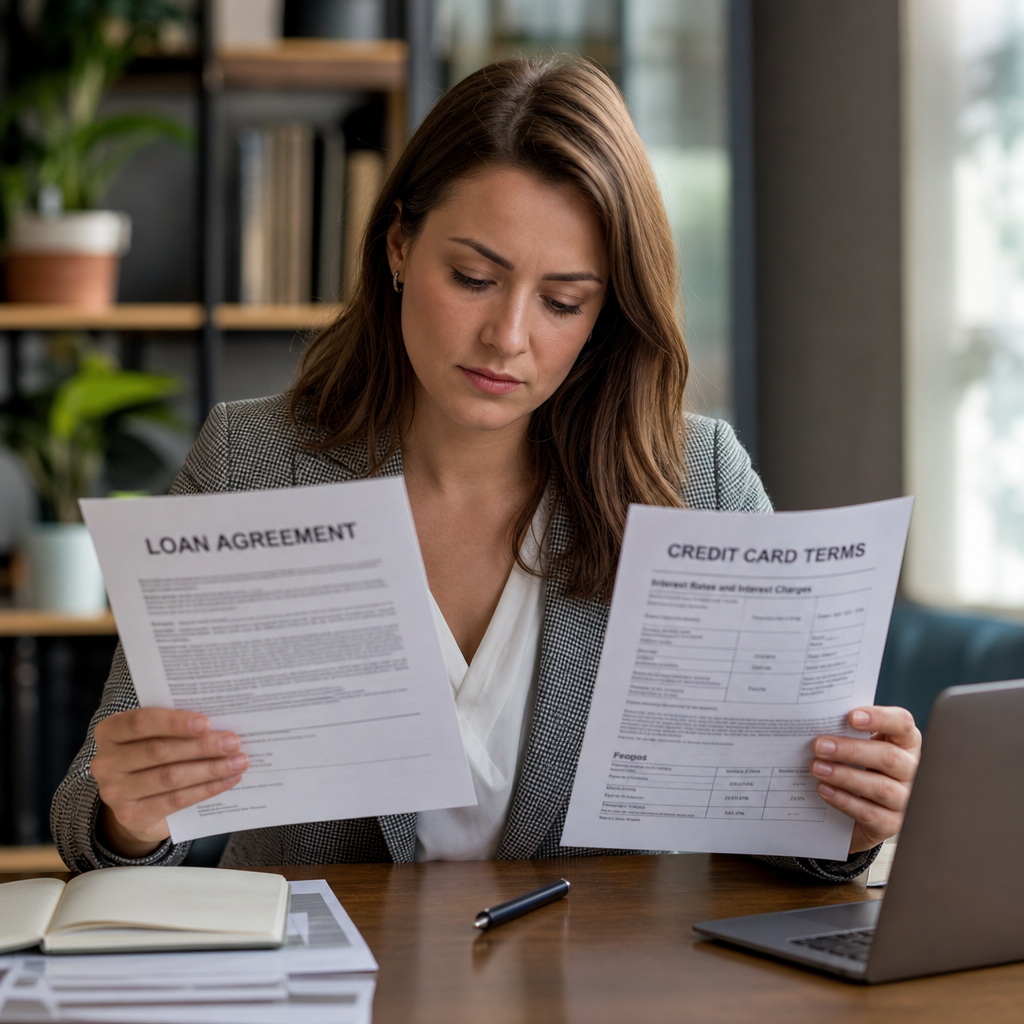
When you need to borrow money, you generally have two main options: a personal loan or a credit card. Both let you access funds you don’t currently have, but they work very differently—and choosing the wrong one can cost you hundreds or even thousands of dollars in unnecessary interest.
This guide provides a clear, side-by-side comparison of personal loans and credit cards, explaining when each option makes financial sense, the true cost differences, and how to make the smartest borrowing decision for your specific situation.
Personal Loan vs. Credit Card: Key Differences
| Feature | Personal Loan | Credit Card |
|---|---|---|
| Interest Rate (APR) | 6%–36% | 17%–29%+ |
| Interest Type | Fixed (usually) | Variable (usually) |
| Repayment | Fixed monthly payments | Minimum payment + revolving |
| Term | 1–7 years | Indefinite (revolving) |
| Borrowing Limit | $1,000–$100,000 | $500–$50,000+ (credit limit) |
| Access to Funds | Lump sum upfront | Ongoing as needed |
| Collateral Required | Usually unsecured | Unsecured |
| Grace Period | None—interest starts immediately | 21–25 days (if paid in full) |
| Origination Fee | 0%–8% of loan amount | None |
| Rewards | None | Cash back, points, miles |
| Credit Impact | Installment loan (positive diversity) | Revolving credit (utilization-dependent) |
When a Personal Loan Is the Better Choice
1. Large, One-Time Expenses
If you need $5,000-$50,000 for a specific purpose—home renovation, medical bills, a major purchase—a personal loan provides the full amount upfront with a structured repayment schedule. You know exactly what you’ll pay each month and when the debt will be eliminated.
Example: A $15,000 kitchen renovation on a personal loan at 9% APR for 5 years costs $311/month with $3,685 in total interest. The same amount on a credit card at 22% APR with $311 monthly payments would take 7+ years and cost $11,000+ in interest.
2. Debt Consolidation
Combining multiple high-interest credit card balances into a single personal loan at a lower rate is one of the most effective debt reduction strategies. You replace multiple payments with one, often at a significantly lower interest rate. Read our complete debt consolidation guide or compare the best consolidation loans.
Example: Three credit cards totaling $20,000 at an average 24% APR consolidated into a personal loan at 10% APR saves approximately $8,000-$12,000 in interest over the repayment period.
3. When You Need Predictable Payments
Personal loans have fixed interest rates and fixed monthly payments. You know from day one exactly what you’ll pay each month and when the debt will be paid off. This predictability makes budgeting straightforward and eliminates the risk of rate increases.
4. When Your Credit Score Is Strong
Borrowers with good to excellent credit (700+) qualify for personal loan rates of 6-12%—dramatically lower than most credit card rates. The better your credit score, the more advantageous a personal loan becomes compared to a credit card.
5. When You Want to Improve Your Credit Mix
Adding an installment loan to a credit profile dominated by revolving credit (credit cards) can improve your credit mix—which accounts for 10% of your FICO score. This is a secondary benefit, not a primary reason to borrow, but it’s worth noting.
When a Credit Card Is the Better Choice
1. Short-Term Purchases You’ll Pay Off Quickly
If you can pay the balance in full within the grace period (21-25 days after your statement closes), a credit card effectively provides a free short-term loan. No interest, no fees—and you earn rewards. This is the ideal credit card use case.
Example: A $2,000 appliance purchase on a 2% cash back card, paid in full by the due date, costs you nothing in interest and earns $40 in cash back. The same purchase on a personal loan would cost interest from day one plus a potential origination fee.
2. Ongoing or Unpredictable Expenses
Credit cards provide revolving access to funds—you can borrow, repay, and borrow again up to your credit limit. For variable expenses like business travel, emergency repairs, or fluctuating monthly costs, a credit card’s flexibility is unmatched.
3. When 0% APR Introductory Offers Are Available
Many credit cards offer 0% APR for 12-21 months on purchases or balance transfers. If you can pay off the balance within the promotional period, this is effectively free borrowing. Our guides to best 0% APR cards and best balance transfer cards highlight current offers.
Example: A $6,000 expense on a card with 0% APR for 18 months costs $0 in interest if paid off within 18 months ($333/month). A personal loan at 9% for the same amount and timeline would cost approximately $450 in interest.
4. Small Purchases and Everyday Spending
Personal loans aren’t practical for $200 grocery runs or $50 gas fill-ups. Credit cards are designed for frequent, small transactions—and reward cards pay you back for everyday spending.
5. When You Want Purchase Protections
Credit cards often include valuable protections that personal loans don’t: extended warranties, purchase protection against damage or theft, price protection, and dispute rights under the Fair Credit Billing Act. For large purchases, these protections add real value.
6. When You Want to Earn Rewards
Personal loans don’t earn rewards. Credit cards can earn 1-5% cash back or equivalent points/miles on every purchase. For someone spending $2,000/month on a 2% cash back card and paying in full, that’s $480/year in free money. See our best rewards cards for top picks.
The Cost Comparison: Real Numbers
Let’s compare the actual cost of borrowing $10,000 through each method:
| Scenario | Personal Loan (9% APR, 3-yr) | Credit Card (22% APR, $300/mo) | Credit Card (0% APR, 18 mo) |
|---|---|---|---|
| Monthly Payment | $318 | $300 | $556 |
| Total Interest Paid | $1,445 | $4,745 | $0 |
| Time to Pay Off | 36 months | 50 months | 18 months |
| Total Cost | $11,445 | $14,745 | $10,000 |
| Origination Fee (3%) | $300 | $0 | $0 |
| True Total Cost | $11,745 | $14,745 | $10,000 |
The personal loan saves $3,000 compared to the standard credit card rate. But the 0% APR promotional card wins overall—if you can pay it off within the promotional period. If you can’t, the rate jumps to 22%+ and the math flips dramatically.
Impact on Your Credit Score
Personal Loan Impact
- Hard inquiry: -3 to -5 points (temporary)
- New account: Lowers average account age slightly
- Credit mix: Adding an installment loan can improve your mix (+positive)
- Utilization: No impact on credit card utilization ratio
- Payment history: Builds positive history with on-time payments
Credit Card Impact
- Hard inquiry: -3 to -5 points (temporary)
- New account: Lowers average account age slightly
- Utilization: A $10,000 balance on a $12,000 limit = 83% utilization (very negative). Keeping utilization below 30% is critical.
- Payment history: Builds positive history with on-time payments
The key difference is utilization. Personal loans don’t factor into credit card utilization ratios—the 30% factor that drives nearly a third of your FICO score. A large credit card balance, even if paid on time, can significantly depress your score until it’s paid down.
Decision Framework: Which Should You Choose?
Choose a Personal Loan When:
- You’re borrowing $5,000+ for a specific, one-time purpose
- You want fixed, predictable monthly payments
- You need 2-7 years to repay
- Your credit score qualifies you for a rate significantly below credit card APRs
- You’re consolidating existing credit card debt
- You want to minimize credit utilization impact
Choose a Credit Card When:
- You’ll pay the balance in full within the grace period (or promotional period)
- You’re making smaller, ongoing purchases
- You want to earn rewards on spending
- You need flexible access to funds rather than a lump sum
- A 0% APR promotional offer covers your repayment timeline
- You want purchase protections (extended warranty, dispute rights)
Consider a Hybrid Approach When:
- You have some debt that qualifies for a 0% balance transfer and some that’s better in a personal loan
- You want the fixed payments of a loan for large debt but keep a card for ongoing expenses
- You’re rebuilding credit and want both installment and revolving account diversity
Alternatives Worth Considering
Home Equity Loan or HELOC
If you own a home, borrowing against your equity typically offers the lowest rates (often 6-8%). However, your home is collateral—fail to repay and you risk foreclosure. See our HELOC vs. home equity loan comparison.
401(k) Loan
You can borrow up to 50% of your 401(k) balance (up to $50,000). You pay interest to yourself, but you miss out on market returns while the money is out of your account. Major risk: if you leave your job, the full balance may become due immediately.
Peer-to-Peer Lending
Platforms like LendingClub and Prosper connect borrowers with individual investors. Rates can be competitive with traditional personal loans, especially for borrowers with good credit.
Frequently Asked Questions
Can I use a personal loan to pay off credit cards?
Yes—this is one of the most effective uses of a personal loan. If your personal loan rate is lower than your credit card rates, consolidating saves money on interest and simplifies payments. Read our guide to getting out of credit card debt for more strategies.
Is it better to get a personal loan or use a credit card for medical bills?
For medical bills, first negotiate the amount and ask about zero-interest payment plans directly from the provider—many hospitals and clinics offer 12-24 month interest-free plans. If that’s not available, a personal loan at a lower rate is typically better than carrying medical debt on a high-APR credit card. See our guide on negotiating medical bills.
Do personal loans hurt your credit?
The initial application causes a small, temporary dip (hard inquiry). But the long-term effect is often positive: regular on-time payments build payment history, and the installment loan improves your credit mix. Unlike credit cards, personal loan balances don’t affect your utilization ratio.
What credit score do I need for a personal loan?
Most lenders require a minimum of 580-620 for approval, but the best rates go to borrowers with 720+. Below 670, expect rates above 15%, which narrows the gap with credit card rates and reduces the personal loan advantage.
Can I get a personal loan with bad credit?
Yes, but rates will be high (20-36%). At those rates, the savings over a credit card are minimal. Consider alternatives: credit union loans (often more lenient), secured loans, or working on improving your credit score before applying.
Should I take out a personal loan for a vacation?
Generally, no. Borrowing for discretionary spending is rarely advisable unless you have a clear, short repayment plan. Save in advance instead—check our money-saving tips for ways to build a vacation fund.
How to Apply for a Personal Loan
If you’ve decided a personal loan is the right choice, follow these steps to get the best deal:
- Check your credit score. Know where you stand before applying. Scores above 720 qualify for the best rates. Use a free credit monitoring service to check without affecting your score.
- Pre-qualify with multiple lenders. Most online lenders offer pre-qualification with a soft credit pull. Compare rates from at least 3-5 lenders including online lenders, your bank, and credit unions.
- Compare total cost, not just APR. Factor in origination fees, which can add 1-8% to the loan cost. A loan at 8% APR with a 5% origination fee may cost more than a loan at 9.5% APR with no fee.
- Submit your formal application. Once you’ve identified the best offer, submit a full application. This triggers a hard inquiry but is necessary to lock in your rate.
- Review the loan agreement carefully. Check for prepayment penalties, late fee structures, and autopay discount requirements before signing.
The Bottom Line
The choice between a personal loan and a credit card ultimately comes down to three factors: how much you’re borrowing, how long you need to repay, and what interest rate you qualify for.
For large amounts that need months or years to repay, a personal loan’s lower fixed rate almost always wins. For everyday purchases you’ll pay off within the grace period, a rewards credit card is unbeatable. And for mid-range amounts, a 0% APR promotional credit card offers the best of both worlds—if you have the discipline to pay it off before the promotional period ends.
Whatever you choose, borrow only what you can realistically repay, compare multiple offers before committing, and always read the fine print. The cheapest loan is always the one you don’t need—so build your emergency fund and save for major purchases whenever possible.